
Agropoisons? No thanks!

Rapunzel has been there from the very beginning
Agropoisons? No thanks! is a campaign by the "Alliance for a Future-Proof Agriculture", a coalition of entrepreneurs committed to 100% organic farming. Some of the alliance partners are among the founders of the organic movement. This includes Joseph Wilhelm, the founder of Rapunzel Naturkost.
Rapunzel has been part of the alliance from the very beginning and supports the "Agropoisons? No thanks!" campaign to ensure that future generations also have a livable future on this planet.
After all, agropoisons do not stop at the edge of the field. They affect our entire ecosystem and our organisms, as various studies in recent years have already shown.
In organic farming, chemical-synthetic pesticides are fundamentally prohibited. Organic farmers work with natural cycles, diverse crop rotations, and gentle methods.
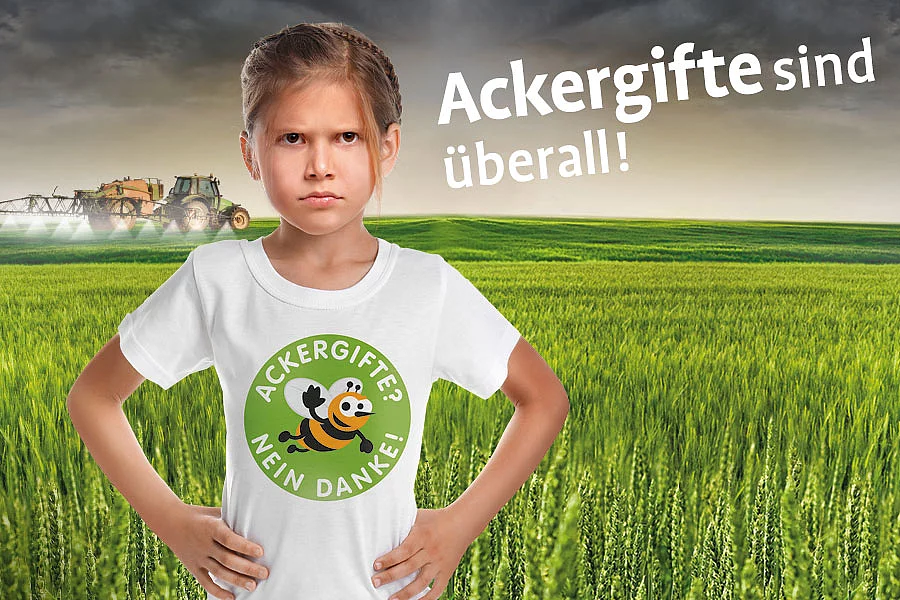
We are calling for a phased phase-out of the use of chemical-synthetic pesticides by 2035.
The EU Commission must gradually ban all chemical-synthetic pesticides by 2035. One of the alliance's most urgent demands on the path to this goal: the most widespread agropoisons, such as glyphosate, pendimethalin, prosulfocarb and terbutylazin, must be banned immediately. These four active substances were detected most frequently, even far removed from potential sources.
Incidentally, agriculture without pesticides works – 16,000 organic farms in Germany have been proving this for years.
Our demands
1. Improving the authorisation process
2. Immediate ban on these active substances
An immediate ban on active substances that are detected particularly frequently and in high concentrations in the air is urgently needed. Glyphosate, pendimethalin, prosulfocarb and terbuthylazine are identified in monitoring programmes as substances that spread easily through the air, are transported over very long distances and can be detected across vast areas.
Our Reasons
Pesticides in the air – an intricate interplay
Long-distance transport – as the TIEM pesticide study has now confirmed for the first time – means that pesticides come into contact with other environmental toxins.
Additional interactions can arise, for example, with nitrogen oxides from road traffic.
This creates an incalculable risk potential that previous assessments do not cover.
Gaps in risk assessment
If it turns out that risk assessment, much like the spread of pesticides, is based on false assumptions, the question of responsibility arises.
The pesticide industry typically does not accept this responsibility, as clear proof of danger is required for each individual product.
Until such proof is provided, the substances continue to be regarded as safe.
Voices on the subject

"I am deeply shocked that glyphosate and over 130 other pesticide active substances have been found in every region of Germany. Politics must finally act and drastically restrict the use of pesticides. After all, we have only this one world. It must remain a place worth living in for our children and grandchildren! I see the entire Earth, in all its diversity, under threat, along with all those who still call it home."
Leonhard Wilhelm, Managing Director of Rapunzel Naturkost
"The results of our study are shocking. Glyphosate and other agropoisons are spreading like a veritable pesticide cocktail to the remotest corners of Germany. Pesticides are ending up in protected natural areas, on organic fields and in the air we breathe. We call on the federal government to take immediate action and better protect people and nature."
Karl Bär, agricultural expert, Environmental Institute Munich

Scientific studies on pesticide contamination
The first clear indications of how far agropoisons spread beyond the fields came from the "Urinale" study. Glyphosate was detected in the urine of over 2,000 participants, even among people who mainly consumed organic food. These findings suggested that agropoisons might be absorbed not only through food but also via the air. In response, organic manufacturers, specialist retailers and civil society organisations joined forces and, together with the Munich Environmental Institute, launched a new scientific study to investigate the extent of pesticide contamination in the air across Germany.
The Urinals
Between October 2015 and January 2016, the citizen initiative Landwende conducted the "Urinale" study, in which over 2,000 people from Germany had their urine tested for glyphosate. The substance was detected in 99.6% of the evaluable samples – often significantly above the comparison value for pesticide residues in drinking water. Samples from children and adolescents showed particularly high levels. Even participants who consumed predominantly organic food were almost as heavily contaminated as those with a conventional diet – regardless of whether they lived in urban or rural areas. As organic products are strictly tested for residues, the findings suggest that glyphosate enters cities not only via food but possibly also through the air.
Pesticide contamination of the air
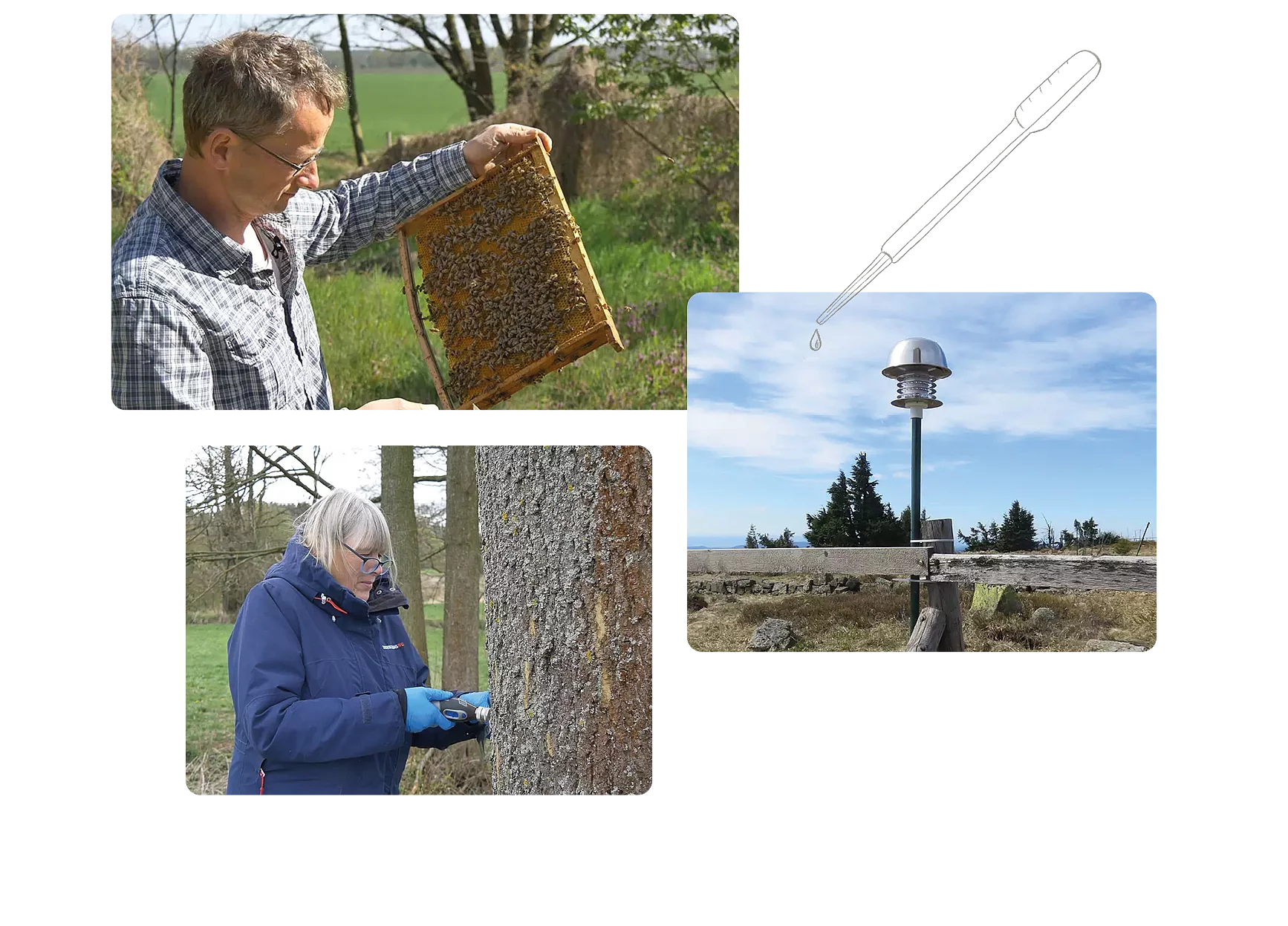
For years, the agrochemical industry has given the impression that pesticides remain where they are applied. Now, the most comprehensive study to date on pesticide contamination in the air confirms just how far these agropoisons spread. Measurements using technical collectors, bee bread, ventilation filters and bark samples show that pesticides and their breakdown products enter cities, protected areas and national parks on a large scale via the air. A total of 138 active substances and breakdown products were detected. Glyphosate was found in all regions examined, and at 73% of the sites, mixtures of at least five – sometimes up to 34 – different pesticides were identified. Around 30% of the substances found were no longer approved. The results are clear: pesticides are detectable in the air across Germany.
Join in and stop agropoisons!
Find out more: Visit https://www.enkeltauglich.bio/ for the key facts on this pressing issue and further details on the study.
Order information material: You can order the brochure 8 Truths about Pesticides, buttons and stickers at https://www.enkeltauglich.bio/bestellen/.
Buy promotional products: Secure promotional products as soon as they are available in stores.
Support the petition: Across Europe, you can take a stand against the use of pesticides with the European Citizens' Initiative "Save Bees and Farmers!" (EBI). Find out more at www.savebeesandfarmers.eu/deu.


